Article 50 disclosure, explained
Practical guidance on Article 50 disclosure for online stores — what the law requires, how to decide, and how to comply.

EU AI Act Transparency Rules Are Now Live: What Businesses Need to Know
The EU AI Act's Article 50 transparency obligations are now in force. Learn what changed on 2 August 2026, who is affected, and the practical steps businesses should take.
Read article
AI Disclosure Decisions: The Complete Guide to When AI Content Requires Disclosure
The hard part of AI content is no longer creating it — it is knowing when it must be disclosed. A practical decision framework for Article 50, with detailed guidance for every major content type, AI tool, and real-world scenario.

Midjourney and the EU AI Act: Who Must Disclose AI Images, When Exemptions Apply, and How to Comply
The EU AI Act's Article 50 requires most commercial uses of Midjourney images to disclose their AI-generated nature. Learn about the law's impact on creators, marketers, and businesses, and how to comply with disclosure requirements.

AI-Written Blogs and Disclosure: A Decision Framework for When and How to Tell Your Readers
Do AI-written blogs require disclosure? It depends on legal requirements, platform rules, and the degree of AI involvement. Use our decision framework to determine when and how to disclose AI usage in your blogs.

Apple Image Playground and EU AI Act Article 50: What Disclosure Is Actually Required?
Apple Image Playground's cartoon-style outputs create regulatory ambiguity under EU AI Act Article 50. We explore the implications for consumer AI tools and Apple's compliance strategy.

AI-Generated Video Disclosure Rules: Platform Policies, Legal Requirements, and When You Must Label Your Content
Understanding AI-generated video disclosure rules is critical for content creators, with platform policies and legal requirements varying widely. Learn how to comply and avoid consequences.

Canva Magic Media and the EU AI Act: What You Must Disclose, Who's Responsible, and How to Label It
The EU AI Act's Article 50 requires disclosure for AI-generated content. Learn how this impacts Canva Magic Media and how to ensure compliance.

When Must You Disclose AI Translation? Rules by Industry, Jurisdiction, and Use Case
Understanding when disclosure is mandatory—versus recommended—requires examining each specific context where AI translation occurs.

Do AI Infographics Require Disclosure? A Decision Framework for Creators
AI infographics face unique disclosure challenges due to their blend of data visualization, design elements, and narrative storytelling. This guide provides a decision framework to determine when and how to properly disclose AI-generated visual content.

Photoshop Generative Fill and the EU AI Act: Which Edits Require Disclosure (and Which Don't)
Photoshop Generative Fill can create amazing images, but does it require disclosure under the EU AI Act? We break down the law and explain when and how to comply.

When Must You Disclose ChatGPT Content Under the EU AI Act? A Scenario-by-Scenario Breakdown
Understand the EU AI Act's transparency obligations for ChatGPT content and avoid legal issues. Discover when disclosure is required for public-facing content and how to assess your use cases.

AI Product Photo Disclosure: Which Edits Require It, by Platform and Law
Understanding AI product photo disclosure requirements is essential for e-commerce sellers. Get a decision-making framework to navigate edit-by-edit guidance, jurisdictional comparisons, and ready-to-use disclosure templates.

How to Label AI Chatbots: Regulations, Methods, and Ready-to-Use Templates
Learn how to label AI chatbots effectively and avoid legal and business risks with our expert guide.

When Do AI-Edited Videos Need Disclosure? A Platform-by-Platform and Legal Decision Framework for Creators
Discover the distinction between AI-generated and AI-edited content and how it impacts disclosure requirements. Get a platform-by-platform breakdown of disclosure policies and a decision tree to help you determine when disclosure is needed.

Microsoft Designer and the EU AI Act: Which Features Require Disclosure and What You Must Label
Microsoft Designer's AI capabilities create specific disclosure obligations under the EU AI Act. Understand which features require labeling and how to comply with Article 50's transparency requirements.
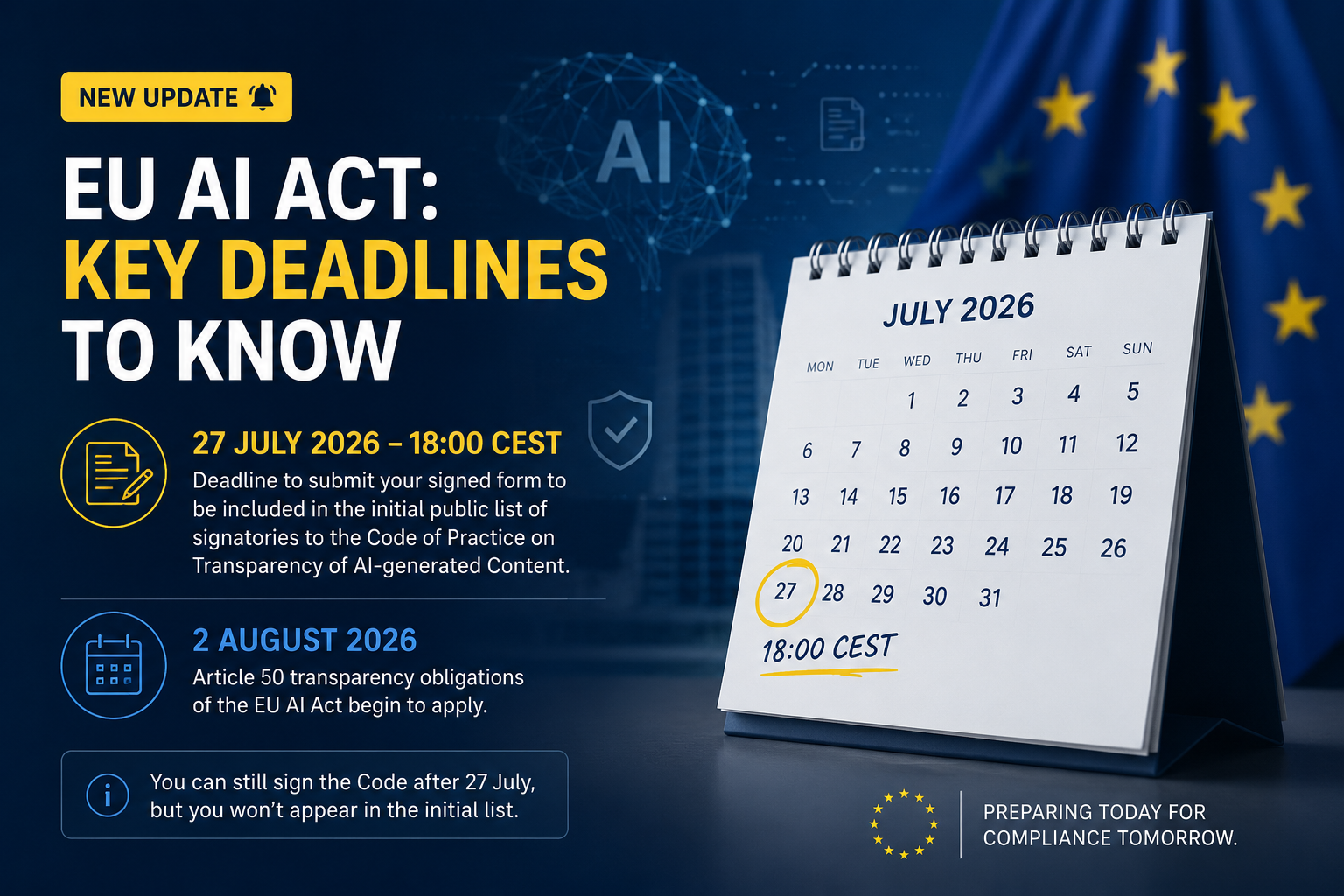
New EU AI Act Deadline Announced: 27 July Cut-Off for Initial Code of Practice Signatories
The European Commission has announced a new 27 July 2026 deadline for organisations wishing to appear on the initial public list of signatories to its Code of Practice on Transparency of AI-generated Content.
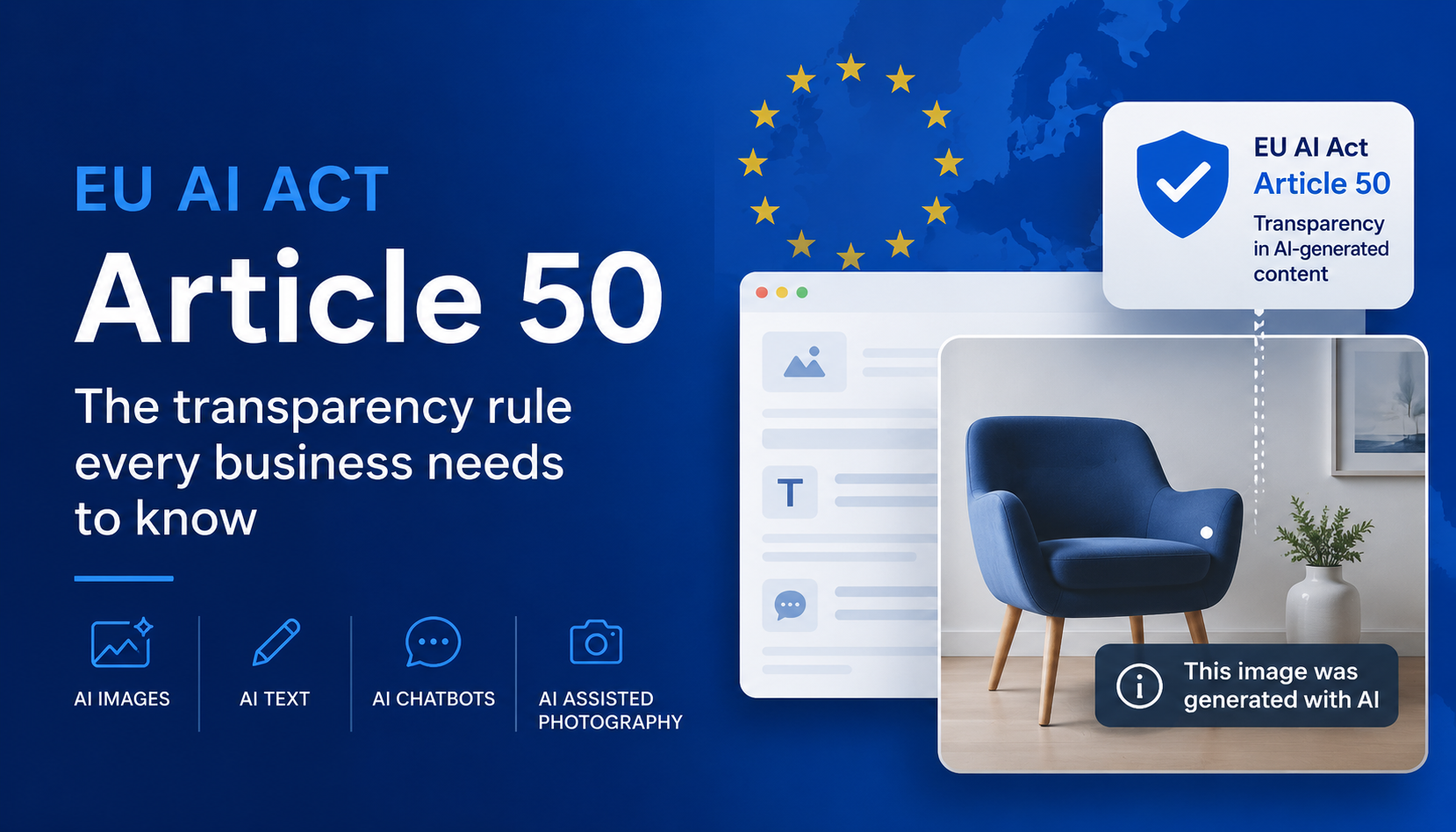
Understanding Article 50 in the Context of the EU AI Act
Article 50 is the EU AI Act section most businesses will feel first: the transparency rule that can apply when you use AI-generated content, AI chatbots, or AI-enhanced media in everyday operations.

Google Just Made AI Disclosure Mainstream. Here's Why That Matters for Every Business
Google AI disclosure tools are making AI transparency mainstream in advertising. Here's why Google's July 2026 rollout matters for EU AI Act Article 50, and why businesses still need their own disclosure workflow.

AI Enhancement Disclosure: When, Why, and How to Transparently Label AI-Enhanced Content
AI enhancement disclosure is becoming increasingly important for content creators to build trust and avoid legal issues. Learn when and how to disclose AI enhancement in your content, including industry-specific templates and decision frameworks.

AI Artwork Disclosure: When, Where, and How to Properly Disclose AI in Your Creative Work
Discover the evolving legal landscape for AI disclosure requirements across jurisdictions, and learn how to properly disclose AI involvement in your creative work to maintain commercial viability and consumer trust.

AI Transparency Audit: A Step-by-Step Guide with Frameworks, Checklists & Case Studies
An AI transparency audit is a systematic examination of AI systems to verify compliance with transparency requirements, assess explainability capabilities, and evaluate disclosure practices across the AI lifecycle.

AI Disclosure Exceptions: When You Don't Have to Disclose AI Use (By Jurisdiction & Industry)
AI disclosure exceptions are critical for compliance officers navigating the complex landscape of AI regulations. Learn about the EU's risk-based framework, US laws, and industry-specific carve-outs to avoid unnecessary disclosures and operational burdens.

The Complete EU AI Act Article 50 Compliance Checklist: A Practical Step-by-Step Guide for 2026
A practical, step-by-step checklist for EU AI Act Article 50 transparency compliance — inventory, classification, exemptions, disclosure implementation, and documentation, updated for the 2026 enforcement deadline.

The EU AI Act Explained: The Law vs the Guidelines vs the Code of Practice

Provider vs Deployer of AI Systems: Key Differences, Obligations & How to Identify Your Role Under the EU AI Act
The EU AI Act creates distinct roles with different obligations for providers and deployers of AI systems. Understanding which role applies to your organization is crucial for compliance. Learn about the key differences, obligations, and how to identify your role in this article.

Who Does Article 50 Apply To? A Complete Guide to EU AI Act Transparency Obligations
EU AI Act Article 50 applies to AI system providers, deployers, importers, and distributors who place AI systems on the EU market or put them into service within EU territory. The scope covers any business entity that provides AI systems generating synthetic content, including e-commerce platforms, content creators, and marketing agencies. Learn about the transparency requirements and how to comply with the regulation.
What Is the EU AI Act? A Practical Guide to the World's First Comprehensive AI Law
The EU AI Act is a risk-based framework for AI systems, categorizing them into four risk levels—minimal, limited, high-risk, and unacceptable—with specific compliance requirements for each category.